|
|
Overview of the KICP  Cosmological discoveries over the past two decades have had an impact on both astronomy and physics. For example, we have found that the Universe is a giant particle accelerator, which enables particles to have energies that are 30 million times higher than those found in terrestrial accelerators. Another area where physics and astronomy are intertwined is in understanding "dark matter". The Universe contains large amounts of "dark matter" which scientists feel is made of a particle that is yet to be discovered. The origin of structure in the Universe such as galaxies and clusters of galaxies is believed to have happened through sub-atomic quantum fluctuations, whose ripples we see as tiny fluctuations in the temperature of cosmic microwave background across the sky. These and other discoveries show that physics at the smallest scale - interactions of the quarks and leptons - is intimately connected with the largest scale - the constitution and birth of the cosmos itself. The Kavli Institute for Cosmological Physics is at the forefront of research that exploits these connections. It is committed to the development of innovative approaches that combine both physics and astronomy to further our understanding of the birth and earliest evolution of the Universe. The KICP was founded in August 2001 as one of the National Science Foundation's Physics Frontiers Centers ( PFC) and was originally named the Center for Cosmological Physics at the University of Chicago. On March 10th 2004, following a generous endowment from the Kavli Foundation the CfCP was renamed the Kavli Institute for Cosmological Physics (KICP). This endowment has made this research institute devoted to interdisciplinary cosmological physics a permanent entity at the University of Chicago. There are a number of profound questions that form the primary scientific focus of the Institute:
- What is the nature of the dark energy that dominates the Universe and what is its impact on the evolution of the Universe?
- Was there an inflationary epoch in the first moments of the Universe, and if so, what is the underlying physics that caused it?
- What is the nature of dark matter? Is it a Weakly Interacting Massive Particle (WIMP) and if it is how can it be discovered and how does it fit into the Standard Model of Particle Physics?
- What clues do nature's highest energy particles offer about the unification of forces?
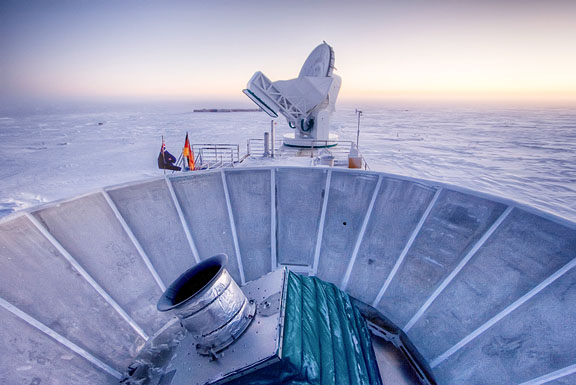
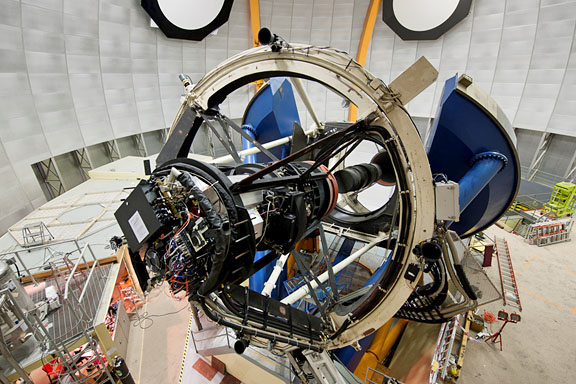
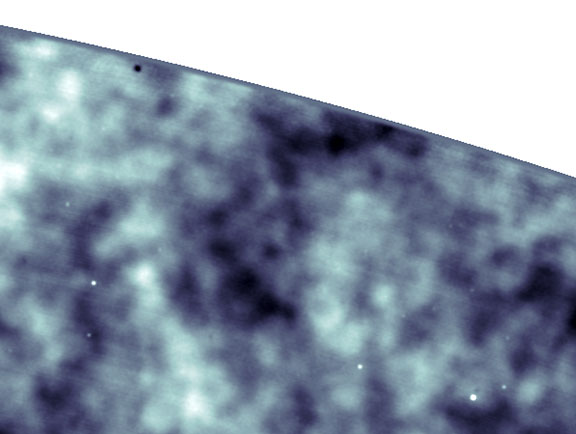
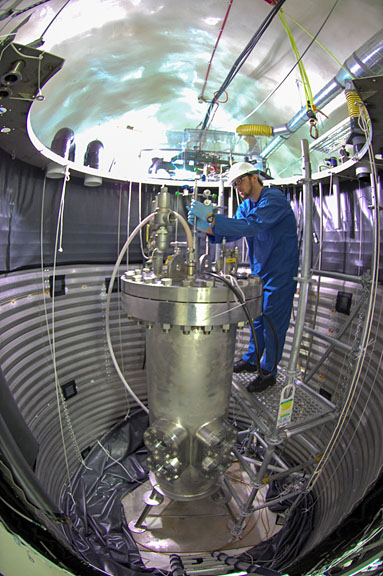
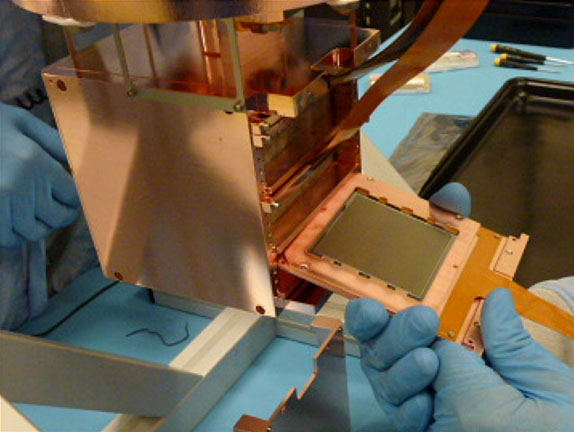
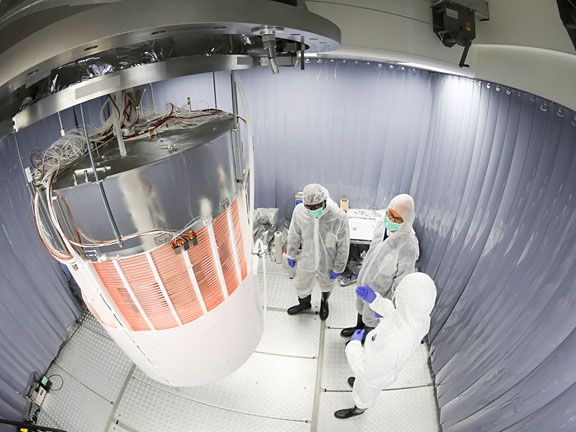
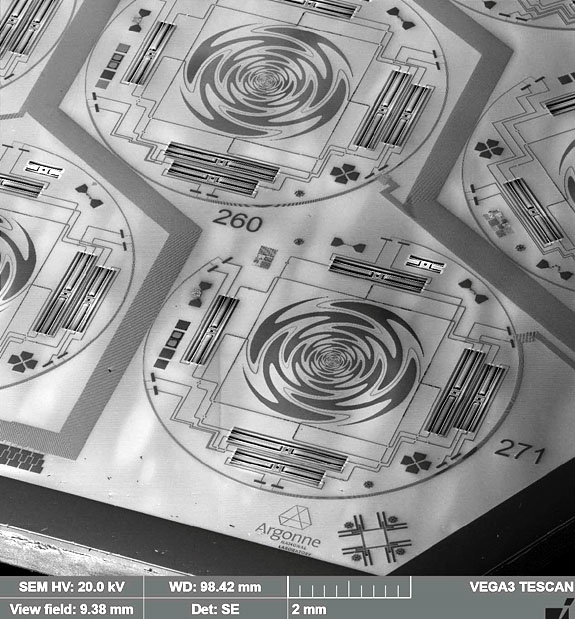
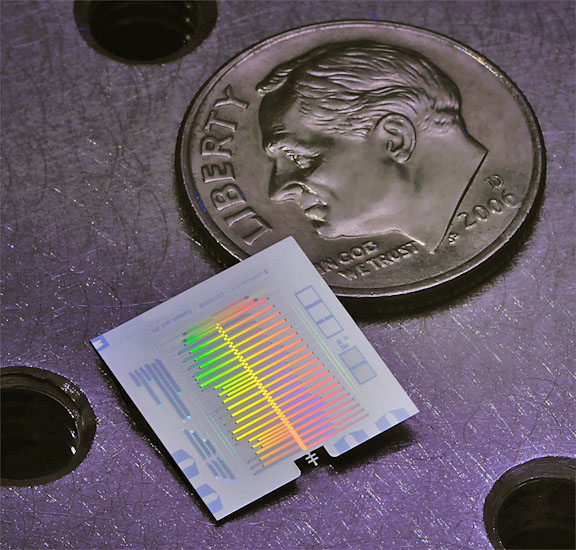
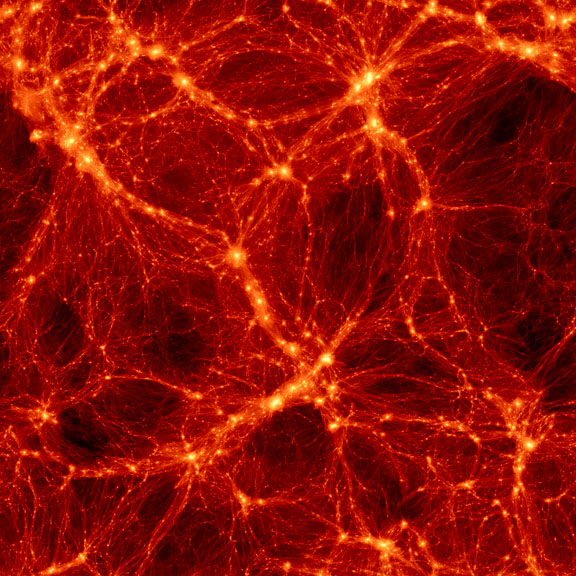
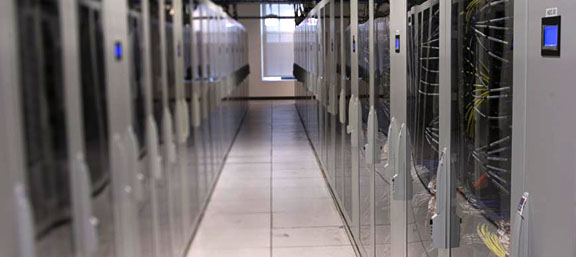
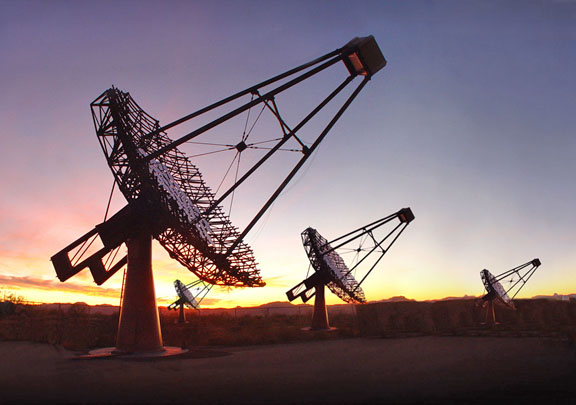
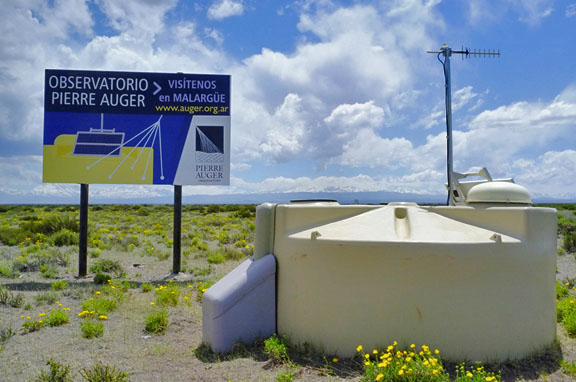
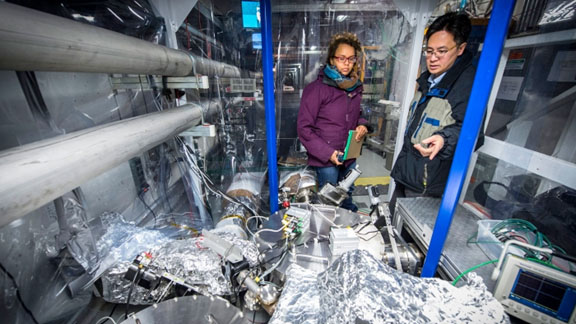
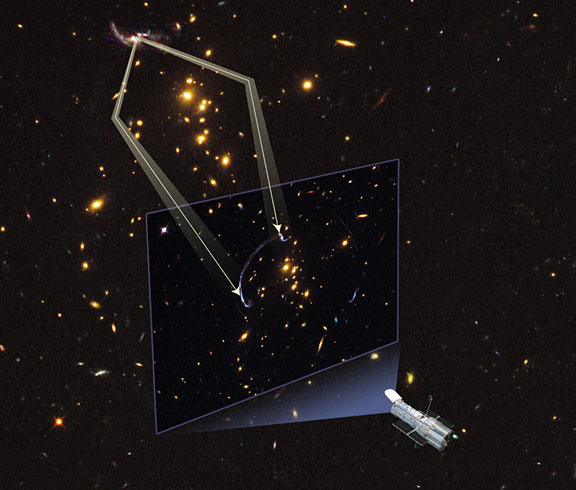
To attempt to answer these questions a variety of experimental work is being carried out at the Institute that comes under the purview of eight research-focused major activities (MAs), five of which are supported by the KICP's Physics Frontier Center (Inflation, Dark Energy, Dark Matter, Detector Development, and Computational Cosmology) and three which are supported by external funding and the institute's endowment: High Energy Particles from Space, Observational Cosmology, and Relativity. The institute and its PFC support three additional, non-research focused major activities: Fellows; Conferences Workshops, and Visitor; and Education, Outreach, and Diversity. A brief description of these themes of the Institute are given here. To find out more about them, kindly refer to our research pages. Inflation BICEP2 and the South Pole Telescope. The Inflation MA seeks to test the paradigm of inflation and reveal the underlying physics by searching for the B-mode polarization signature and characterizing the primordial density perturbations. To accomplish that goal, the MA is heavily involved in the South Pole Telescope (SPT) program, in particular the SPT polarization experiment. The MA also provides support for the BICEP/Keck Array series of experiments at the South Pole, which also seek to identify the B-mode polarization. The MA supports an active theoretical effort as well, both in the study of the fundamental physics underlying inflation and in studies supporting the experimental effort. Finally, the MA has established two of the PFC's Research Hubs, the CMB Polarization Hub and the Non-Gaussianity (now Inflation) Hub. Dark Energy The Dark Energy Camera (DECam) mounted on the Blanco Telescope at the Cerro Tololo Inter-Anerican Observatory (CTIO). The Dark Energy MA addresses whether or not cosmic acceleration requires a modification of Einstein's theory of gravity, General Relativity, and if not, to probe the nature of the dark energy that is driving acceleration and that makes up 75% of the universe. The MA is leading two experimental efforts: The SPT Sunyaev-Zel'dovich survey and the Dark Energy Survey. In addition to supporting an active theoretical effort to study Dark Energy, the MA contains two of the PFC's research hubs: the Joint Analysis Hub and the Supernova Hub. Cosmic Microwave Background (CMB) temperature anisotropies at 150 GHz as measured with SPTpol over a small portion of the full 500 deg 2 survey. Bright points are active galactic nuclei (AGNs) and gravitationally lensed dusty star-forming galaxies. The dark point towards the upper left is a massive galaxy cluster that manifests itself as a shadow in the CMB through the thermal Sunyaev-Zel'dovich Effect. Dark Matter The PICO-60 detector being installed at SNOLAB The Dark Matter MA seeks to understand the nature of dark matter, in particular to confirm or refute the hypothesis that dark matter consists of Weakly Interacting Massive Particles (WIMPs), and if discovered, to understand how they fit into extensions of the Standard Model of particle physics. The MA currently plays a role in five direct dark matter detection efforts: the PICO (formerly COUPP) program, CoGeNT/C-4 program, the DarkSide and XENON1T noble liquid direct dark matter detection experiments, and the DAMIC effort. In addition to the experimental programs, the MA supports a number of theorists, all of whom participate in the Dark Matter Hub which seeks to synthesize and understand evidence for dark matter in all methods used to search for it (direct detection, indirect detection, collider experiments, and structure formation). A DAMIC CCD being installed into the electronics enclosure at SNOLAB Assembling the XENON1T Time Projection Chamber (TPC) in Gran Sasso National Laboratory. Detector Development One pixel of the SPT-3G detector. Each pixel measures X and Y polarization at three different frequencies -- 95, 150, and 220 GHz - using six superconducting bolometers The Detector Development MA exists to enable scientific breakthroughs by pushing the scale and sensitivity of mm-wave and dark matter detectors to their technological limits. This MA is currently focusing upon developing large bolometer detector arrays for CMB polarizaton measurements and developing large-mass, low-noise dark matter detectors. The Detector Development MA has recently begun a program of research and development of Microwave Kinetic Inductor Detectors (MKIDs) for astrophysical and cosmological observations. SuperSpec prototype; SuperSpec is a broadband, on-chip, MKID. Computational Cosmology The cosmic web of dark matter filaments and halos in a simulation of size 300 million light years; brighter colors represent higher density. The Computational Cosmology MA provides the high-performance computing framework needed to address the key cosmology questions of the Science MAs and trains the next generation of researchers to thrive in the upcoming massively parallel computing era. The members of this MA work closely with those in the Science MAs to accomplish their computational goals, establish and maintain computing hardware, provide training and support to the local community, and build collaborations in computational cosmololgy at the KICP, Fermilab, and Argonne National Lab. The midway computing cluster at the University of Chicago's Research Computing Cluster. The KICP has over 500 nodes dedicates solely for its use. High Energy Particles from Space Research in the High Energy Particles from Space area focuses upon two major experimental efforts. The Pierre Auger Observatory, located in Argentina, is the world's largest installation dedicated to the study of Ultra-High Energy Cosmic Rays (UHECRs). Using a combination of techniques including ground based Extensive Air Shower detectors, fluorescence detectors, and, most recently, microwave detectors Auger seeks to understand the origin and properties of the highest energy particles produced in the Universe. The KICP has recently assumed a leadership role in the JEM-EUSO effort to detect UHECRs from a detector located on the International Space Station. Similarly, the VERITAS telescope array seeks to understand the most energetic astrophysical phenomena by studying them via the very highest energy gamma-rays emitted. An Extensive Air Shower detector at the Pierre Auger Observatory. Relativity A KICP graduate student and Fermilab scientist work on the holometer experiment. The KICP supports a research effort in General Relativity. Current projects focus on two areas: Gravitational wave astronomy and its applications to cosmological questions and an effort to understand the quantum nature of spacetime. In collaboration with Fermilab, KICP scientists constructed the holometer experiment. This is the most precise interferomter ever constructed and is capable of detecting hypothesized holographic fluctuations of spacetime if they exist. Observational Cosmology Strong gravitational lensing of a distant galaxy by a massive cluster of galaxies. The KICP's efforts in observational cosmology focus upon the origin, evolution, nd environment of galaxies in the distant Universe. Using innovative observing techniques, such as harnessing the natural magnification power of gravitational lenses, KICP observers are addressing the history of galaxy formation at previously unavailable redshifts. Fellows The Center's Fellowship program is dedicated to creating an environment in which the next generation of outstanding researchers in cosmology can develop and thrive as scientists and more broadly as scholars and educators. The Fellows MA offers early-career scientists unusual freedom and independence to pursue their research yet provides the structure and stimulation of the interdisciplinary environment of the PFC. Education, Outreach, and Diversity The Institute's science captures the public's imagination with big ideas and dramatic research venues e.g., South Pole, the Atacama plateau, and deep underground. The KICP's Education & Outreach Programs seek to share the excitement of discovery with broad and diverse audiences. Our programming is inspired by the scientific passions of Center members, but grounded in educational best practices and practicalities of urban outreach. KICP programming is designed with special attention to groups traditionally underrepresented in the sciences and to create meaningful opportunities for researcher involvement. Strong collaborative partnerships combined with in-house educational expertise and the active participation of Center members allow KICP to offer creative and substantive programs that have lasting and measurable impacts. The Center also strives to broadly share and disseminate information about successful efforts with both the research and education communities Conferences, Workshops, and Visitors The Conferences, Workshops and Visitors (CWV) MA connects our efforts to those of the larger community and in the process enhances both. The CWV MA facilitates the cosmological research of students, postdocs, and faculty at other institutions with the broad spectrum of activities made possible by our Center and engages experts around the country in furthering the Center's science goals.
We welcome you explore our web site further to discover more about the Institute and what the latest research in cosmology is unearthing about our Universe.
|









 Overview