

 |
 |
 |
 |
 |
 |
 |
 |
 |
 |
|
About KICP
|
Message from the Directors, Michael S. Turner and Joshua A. Frieman 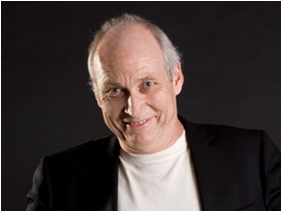 Today, those problems include identifying the dark matter,  understanding the mystery of dark energy, probing the birth of the universe, looking for clues in nature's highest energy particles about the unification of the forces, and learning about the most exotic objects in the Universe with high-energy gamma rays. Progress made in addressing these questions will not only advance our understanding of the Universe but also of the fundamental laws that govern it. Since the time that David N. Schramm was Chairman of Astronomy (from 1978 to 1984), Chicago has been both a pioneer and a leader in cosmological physics, beginning with faculty hires that bridged physics and astronomy and the creation of the Fermilab Theoretical Astrophysics Group at Fermilab in 1983, which has now grown into the Fermilab Center for Particle Astrophysics. In 2001, Bruce Winstein led his colleagues in the creating the Center for Cosmological Physics (CfCP), funded by the Physics Frontier Center (PFC) program within NSF's Division of Physics. The CfCP brought all of our activities in cosmological physics together and created a prestigious Fellows program. In early 2004, through his Kavli Foundation Fred Kavli endowed our center and it became the Kavli Institute for Cosmological Physics (KICP), the third of the fifteen prestigious Kavli Institutes around the world. In 2006 our PFC was renewed under the leadership of Stephan Meyer. In late 2008, the KICP began a process to re-invent our Physics Frontier Center. A proposal built upon the successes of the previous two PFCs, with the new theme of "Pushing Cosmology to the Edge" was submitted to NSF in September 2010 (as a pre-proposal) and received funding effective September 1, 2011. Among the features of this PFC are continuing strong ties with the Fermilab Center for Particle Astrophysics, new ties to Argonne National Laboratory and 21 Key Collaborators from around the country. Michael S. Turner Director of the KICP and PFC Joshua A. Frieman Deputy Director of the KICP |



 Overview