

 |
 |
 |
 |
 |
 |
 |
 |
 |
 |
|
KICP News
|
KICP News
Congratulations to Dr. Zoheyr Doctor June 5, 2019 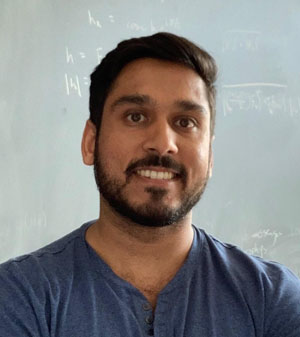 "Zoheyr's thesis represents a major contribution to multi-messenger gravitational wave astronomy. He has published on a wide range of important topics, including a machine learning analysis of black hole waveforms, the first multi-messenger estimates for kilonova ejecta and r-process element production, and the leading observational constraints on electromagnetic counterparts to black hole mergers. Zoheyr's work is at the forefront of an entirely new and exciting field of science." - Daniel Holz, Ph.D. advisor Zoheyr has received a postdoc position in Ben Farr's group, University of Oregon. Related Links: KICP Members: Daniel E. Holz KICP Students: Zoheyr Doctor Scientific projects: Laser Interferometer Gravitational-wave Observatory (LIGO) Wayne Hu has been selected to receive a Faculty Award for Excellence in Graduate Teaching and Mentoring June 3, 2019 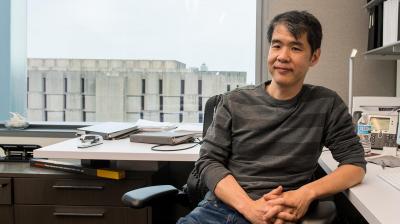 I am thrilled to share that Wayne Hu has been selected to receive a Faculty Award for Excellence in Graduate Teaching and Mentoring. This award honors faculty members for their achievements in classroom teaching and for their special contributions in encouraging the work of graduate students. We plan to recognize Wayne at PSD's Diploma and Hooding Ceremony on June 15. Please join me in congratulating Wayne on this honor. Angela V. Olinto Dean of the Division of the Physical Sciences, Albert A. Michelson Distinguished Service Professor of Astronomy & Astrophysics Related Links: KICP Members: Wayne Hu; Angela V. Olinto Congratulations to Dr. Vadim Semenov May 31, 2019 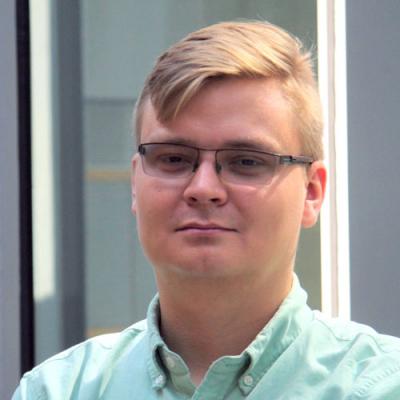 Vadim has received a position of Hubble Fellow at the Institute for Theory and Computation, Harvard University. Related Links: KICP Members: Andrey V. Kravtsov KICP Students: Vadim Semenov Congratulations to Philip Mansfield May 24, 2019 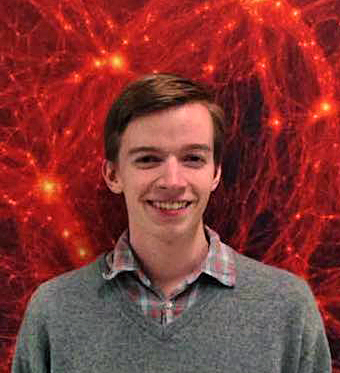 The award is one of the University of Chicago's highest honors and is given in recognition of outstanding achievement and professional promise. Congratulations Phil! John Carlstrom Chair and Subramanyan Chandrasekhar Distinguished Service Professor Related Links: KICP Members: John E. Carlstrom; Andrey V. Kravtsov KICP Students: Philip Mansfield Congratulations to Maya Fishbach May 24, 2019 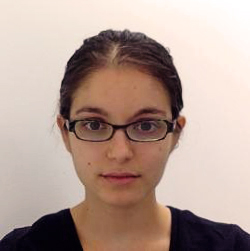 The award is one of the University of Chicago's highest honors and is given in recognition of outstanding achievement and professional promise. Congratulations Maya! John Carlstrom Chair and Subramanyan Chandrasekhar Distinguished Service Professor Related Links: KICP Members: John E. Carlstrom; Daniel E. Holz KICP Students: Maya Fishbach Congratulations to Taylor Hoyt May 24, 2019 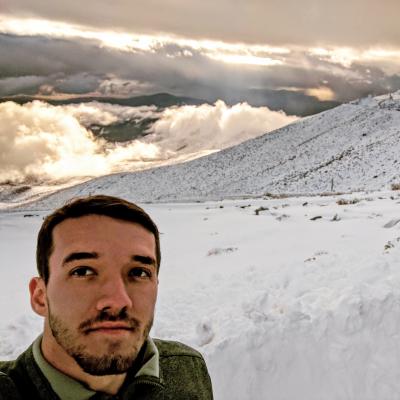 Congratulations Taylor! John Carlstrom Chair and Subramanyan Chandrasekhar Distinguished Service Professor Related Links: KICP Members: John E. Carlstrom; Wendy L. Freedman KICP Students: Taylor Hoyt Vadim Semenov was selected for prestigious NASA Hubble Fellowship Program (NHFP) April 8, 2019 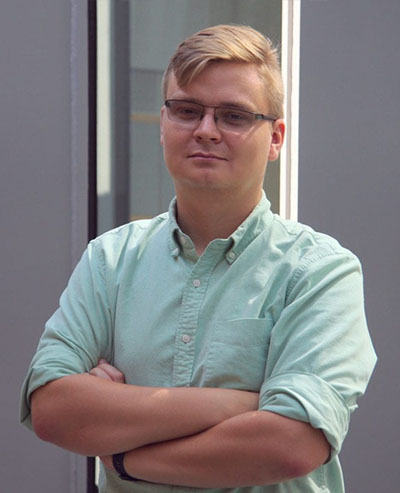 The program enables outstanding postdoctoral scientists to pursue independent research in any area of NASA Astrophysics, using theory, observation, experimentation, or instrument development. Each fellowship provides the awardee up to three years of support. Related Links: KICP Members: Andrey V. Kravtsov KICP Students: Vadim Semenov Lars Bergstrom on Sabbatical at the KICP March 21, 2019 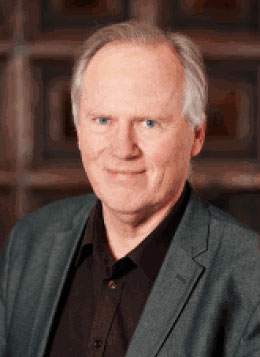 The KICP will welcome 4 new Fellows in the Autumn of 2019 March 18, 2019 
Related Links: KICP Members: Victor Buza; Jose Maria Ezquiaga; Danielle Norcini; Yiming Zhong Scientific projects: BICEP2/The Keck Array/BICEP3; Dark Energy Survey (DES); Large Synoptic Survey Telescope (LSST); Laser Interferometer Gravitational-wave Observatory (LIGO); South Pole Telescope (SPT) Donald York has been awarded the Royal Astronomical Society Service Award for Astronomy January 13, 2019 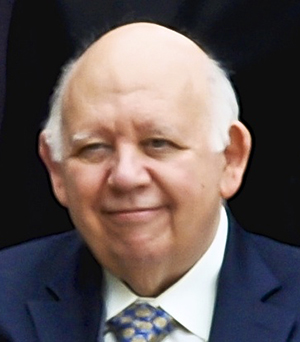 Please join me in congratulating Don York who has been awarded the Royal Astronomical Society Service Award for Astronomy. The RAS citation reads: "Professor Donald York, as the Founding Director of the Sloan Digital Sky Survey (SDSS), was a key figure in the conception, design, construction, and initial operation of one of the most successful astronomical facilities of the 21st century. With its first-ever digital image of the entire northern high galactic latitude sky, homogeneously and painstakingly calibrated in a novel photometric system, plus millions of homogeneously obtained spectra, SDSS has touched every subfield of astronomy. Multiple studies agree that SDSS is the most cited and most impactful facility in ground-based astronomy, or even all astronomy. More than 7,600 papers refer to SDSS in the title or abstract, and these publications have garnered roughly 400,000 citations. Twenty-five of these papers have 1,000 or more citations, and almost 800 have 100 or more citations. Professor York enabled one of the most significant astronomical projects of our lifetimes, one that benefits the entire international community, and is a truly deserving recipient of the RAS Service Award." Congratulations Don! John Carlstrom, Subramanyan Chandrasekhar Distinguished Service Professor and Chair Department of Astronomy & Astrophysics Related Links: KICP Members: Donald G. York Congratulations to Wayne Hu January 2, 2019 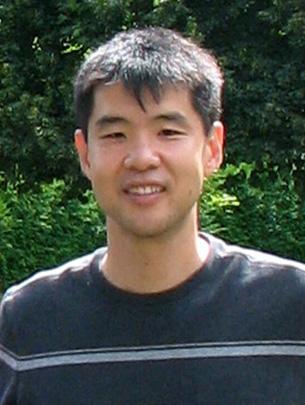 Congratulations Wayne! John Carlstrom Chair of Astronomy & Astrophysics, Subramanyan Chandrasekhar Distinguished Service Professor Read in UChicago News Related Links: KICP Members: Wayne Hu Congratulations to Abigail Vieregg December 12, 2018 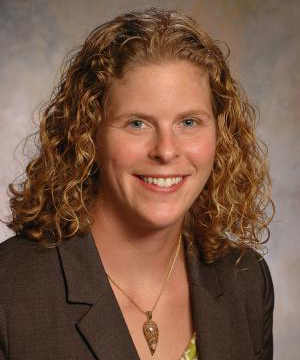 The J. and J. Neubauer Faculty Development Fellowships are funded through the generosity of Joseph and Jeanette Neubauer in support of excellence in teaching. The purpose of the fellowship is to recognize innovative and effective teaching on the part of Assistant and Associate Professors who regularly participate in the College's instructional programs. The Neubauer Fellowships are awarded upon the recommendation of the Dean of the College and the Masters of the Collegiate Divisions. Related Links: KICP Members: Abigail G. Vieregg Congratulations to Grayson Rich October 23, 2018 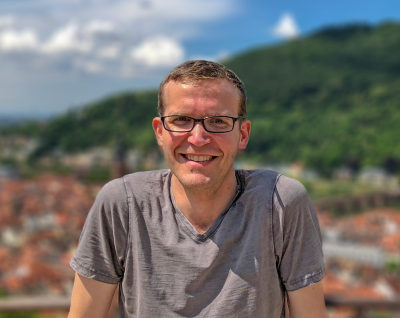 Citation: "For outstanding contributions to the first observation of coherent elastic neutrino nucleus scattering as a member of the COHERENT neutrino experiment at the Oak Ridge National Laboratory." The Dissertation Award recognizes a recent Ph.D. in nuclear physics. The annual award consists of $2,500, a certificate, travel reimbursement, and a registration waiver to receive the award and give an invited talk at a Division of Nuclear Physics session at the APS April Meeting. Related Links: KICP Members: Grayson Rich Response to Claims On Gender and Physics October 13, 2018 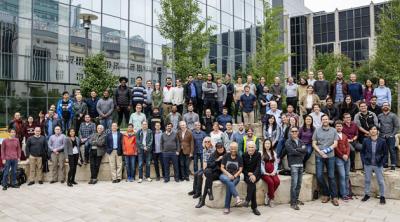 John E. Carlstrom, Chair, Department of Astronomy & Astrophysics Young-Kee Kim, Chair, Department of Physics Michael S. Turner, Director, Kavli Institute for Cosmological Physics Related Links: KICP Members: John E. Carlstrom; Michael S. Turner Elizabeth Buckley-Geer, Salman Habib and Liantao Wang have all been elected Fellows of the APS September 25, 2018 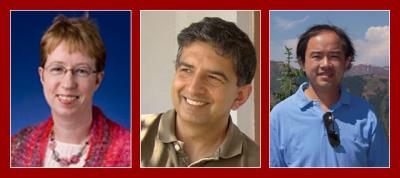 Citation: For the creation and leadership of the Dark Energy Survey Strong Lensing Group including discovery and confirmation of numerous strong lenses and multiply lensed quasars and their application to new measurements of cosmic dark matter and dark energy. Salman Habib, KICP senior member Citation: For outstanding contributions and leadership in the study of quantum-to-classical transitions in nonlinear dynamical systems and the development of the Hybrid/Hardware Accelerated Cosmology Code providing the most detailed simulations of the universe using the world's most advanced supercomputers. LianTao Wang, KICP senior member Citation: For novel contributions to jet sub-structure studies (jet-trimming), facilitating LHC searches for Higgs boson, dark matter, supersymmetry and new dynamics in the electroweak sector, and pioneering explorations for future e+e- and hadron colliders. Related Links: KICP Members: Salman Habib; Lian-Tao Wang Josh Frieman became President Elect of the Aspen Center for Physics August 27, 2018  Aspen Center for Physics Related Links: KICP Members: Joshua A. Frieman Film screening: "The Atomic Cafe (1982)" August 22, 2018  Artfully culled from newsreel footage, government archives, and pop-culture artifacts (cocktails, fashions, cartoons, jukebox songs, etc.), THE ATOMIC CAFE is a mind-boggling compendium of misinformation that was aimed at selling nuclear war to the postwar American public like a new brand of laundry detergent. As singing Polynesians are evacuated from Bikini Atoll and Burt the Turtle tells schoolchildren how to "Duck and Cover," public officials promote a devil-may-care attitude toward the dangers of nuclear attack and radioactive fallout. This groundbreaking, often-imitated documentary created a sensation when first released in 1982; now, with fake news in ascendancy, and the "Bulletin of Atomic Scientists" famous Doomsday Clock set at its furthest point (two minutes to midnight) since 1953, it seems as timely as ever. New 4K DCP digital restoration. (MR) Read more "On the Future: Prospects for Humanity" with physicist Martin Rees August 11, 2018 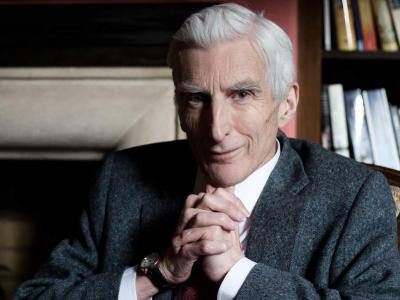 Cindy Pritzker Auditorium Harold Washington Library Center, Chicago Public Library 400 South State Street World-renowned scientist Martin Rees offers his look at the future of humanity and science in this talk based upon his new book On the Future: Prospects for Humanity. Rees argues that humanity's future is bound to the future of science, and our prospects hinge on how successfully we harness technological advances to address the challenges to our collective future. If we are to use science to solve our problems while avoiding its dystopian risks, Rees shows how we must think rationally, globally, collectively, and optimistically about the long-term future. Advances in biotechnology, cybertechnology, robotics, and artificial intelligence - if pursued and applied wisely- could empower us to boost the developing and developed world and overcome the threats humanity faces on Earth, from climate change to nuclear war. Rees offers fascinating insights into cutting-edge science and technology while providing a unique perspective on the critical issues that will define the future of humanity on Earth and beyond. Presented in collaboration with the Chicago Public Library. Doors to the Cindy Pritzker Auditorium open at 5 p.m. and seating is available first come, first served. The event is free but registration is recommended. Books are available for purchase from Seminary Co-op Books and the author will autograph books at the conclusion of the program. Read more Read more >> Congratulations to Brad Benson July 26, 2018 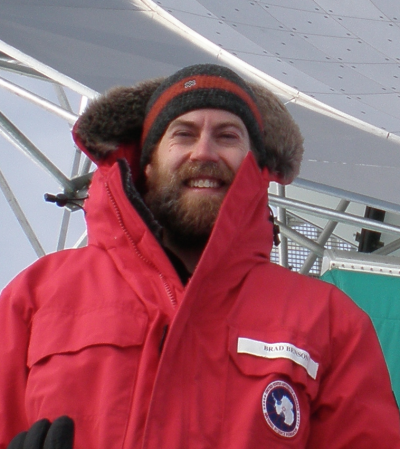 Congratulations Brad! - John E. Carlstrom Subramanyan Chandrasekhar Distinguished Service Professor and Chair Department of Astronomy & Astrophysics Related Links: KICP Members: Bradford A. Benson; John E. Carlstrom Scientific projects: South Pole Telescope (SPT) Congratulations to Mike Gladders July 25, 2018 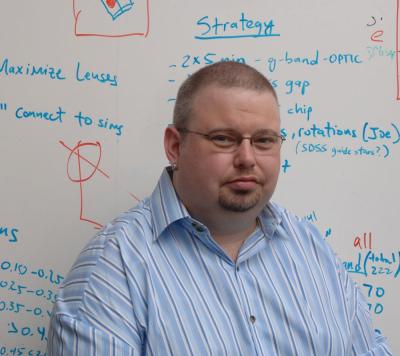 Congratulations Mike! - John E. Carlstrom Subramanyan Chandrasekhar Distinguished Service Professor and Chair Department of Astronomy & Astrophysics Related Links: KICP Members: John E. Carlstrom; Michael D. Gladders Congratulations to Dr. Ross Cawthon July 18, 2018 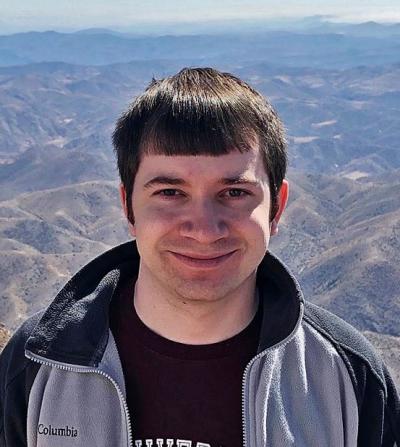 Ross has received a position of Research Associate at the Department of Physics at the University of Wisconsin-Madison. Related Links: KICP Members: Joshua A. Frieman KICP Students: Ross Cawthon Scientific projects: Dark Energy Survey (DES); South Pole Telescope (SPT) Honoring Rocky Kolb for his service as Dean of the Physical Sciences June 27, 2018 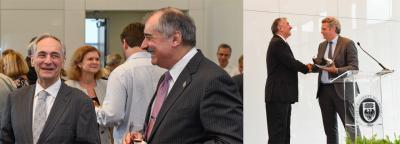 Related Links: KICP Members: Edward W. Kolb Congratulations to Daniel Holz June 18, 2018 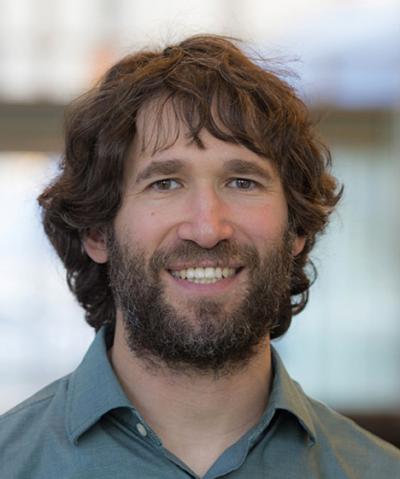 Congratulations Dan! John E. Carlstrom Subramanyan Chandrasekhar Distinguished Service Professor and Chair Department of Astronomy & Astrophysics Related Links: KICP Members: John E. Carlstrom; Daniel E. Holz Congratulations to Dr. Cameron Liang June 15, 2018 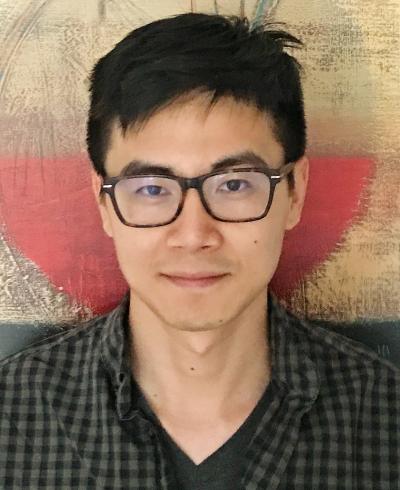 Related Links: KICP Members: Andrey V. Kravtsov KICP Students: Cameron Liang Angela V. Olinto has been appointed Dean of the Division of the Physical Sciences June 7, 2018 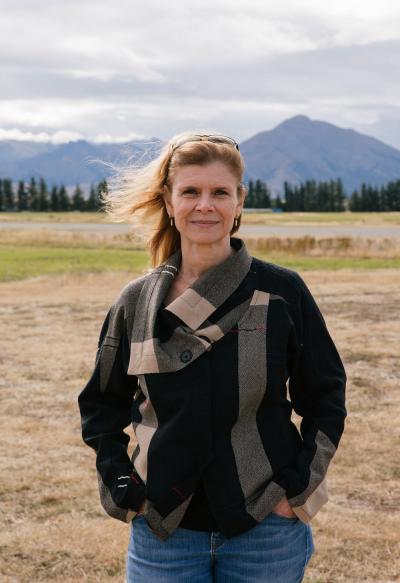 Angela brings depth of University experience and scholarly expertise to this leadership role, making her an excellent choice as dean. She joined the University of Chicago faculty in 1996, and served as chair of the Department of Astronomy and Astrophysics from 2003 to 2006, and from 2012 to 2017. Her research interests are in astroparticle physics and cosmology. Recently, she has focused on understanding the origin of high-energy cosmic rays, gamma rays, and neutrinos. Angela's leadership has extended to large and complex projects. She is the leader of the POEMMA and EUSO space missions and a member of the Pierre Auger Observatory. These international projects aim to discover the origin of high-energy cosmic rays. She is a Fellow of the American Physical Society and was chair of the APS Division of Astrophysics in 2013. She was a trustee of the Aspen Center for Physics, and serves on many advisory committees for the National Academy of Sciences, Department of Energy, National Science Foundation, and NASA. Among numerous other awards and honors, Angela received the Chaire d'Excellence Award of the French Agence Nationale de la Recherche in 2006, the Llewellyn John and Harriet Manchester Quantrell Award for Excellence in Undergraduate Teaching in 2011, and the Faculty Award for Excellence in Graduate Teaching and Mentoring in 2015. Angela's appointment was informed by the recommendations of an elected committee of faculty in the Division of the Physical Sciences, chaired by Stuart A. Kurtz, Professor in the Department of Computer Science. We want to express our appreciation to the committee for their thoughtful work and their commitment to the Division of the Physical Sciences. We would also like to thank Rocky Kolb for his leadership of the Division of the Physical Sciences over the past five years. Under Rocky's leadership, the Division of the Physical Sciences built important initiatives, enhancing its historic strengths as a leading center of scientific discovery and education, and expanded and renovated the Physics Research Center. Rocky will be returning to his full-time work on the faculty at the end of his term as Dean. Please join us in congratulating Angela on this appointment and thanking Rocky for his service. Robert J. Zimmer, President, and Daniel Diermeier, Provost Related Links: KICP Members: Edward W. Kolb; Angela V. Olinto Scientific projects: Pierre Auger Observatory (AUGER) Congratulations to Dr. Pavel Motloch June 4, 2018 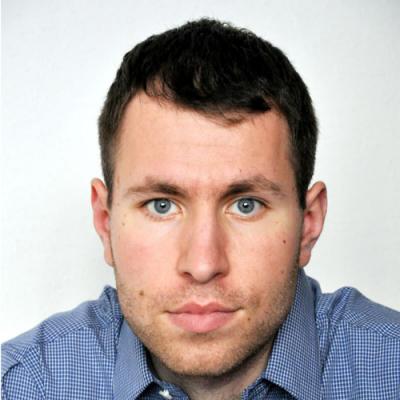 Pavel has recieved a Postdoctoral Fellow position at the Canadian Institute for Theoretical Astrophysics. Related Links: KICP Members: Wayne Hu KICP Students: Pavel Motloch Xenon1t 1 year of data June 1, 2018 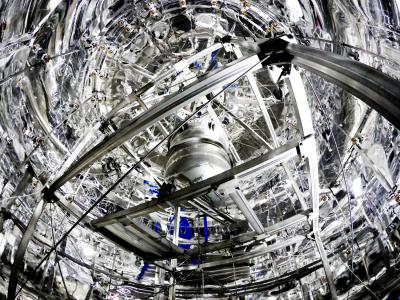 Read more UChicago, Luca Grandi's group "I am really happy with the performance of the XENON1T detector" said Luca Grandi. "XENON1T displays an impressive sensitivity to WIMP spin-independent interaction, about 7 times better than the concurrent leading experiments in the field (for WIMP masses above 6 GeV/c^2). This result shows the potential of combining multi-tonne detectors with low background techniques. Despite this accomplishment, dark matter remains still to be discovered. The search continues!". The contributions of Grandi's group to the XENON projects included several activities. After the initial contribution to the construction and assembly of the XENON1T Time Projection Chamber, the group worked hard to make UChicago the single analysis hub serving the entire international collaboration. The system, developed in collaboration with Robert Gardner and Benedikt Riedel at the UChicago Computational Institute, allows for easy access both to remote grid resources (needed to process the large data volume produced by XENON1T) and local resources available at the UChicago Research Computing Center. The latter, thanks to the support from Runesha Birali and KICP, have been intensively used in these last several months to converge on the results presented in the paper. The UChicago group, with its postdoc Jacques Pienaar and graduate students Katrina Miller and Evan Shockley, contributed to several aspects of the presented analysis, including the development of the neutron background models and Monte Carlo simulations and the study of the response and efficiency of the detector at low energy. The group will continue its involvement in XENON1T analysis by searching for alternative dark matter candidates. In the meanwhile Grandi's group is also heavily involved in the upgrade of the detector to the next phase, known as XENONnT, which will feature a fiducial target mass about 4 times larger and is expected to start data taking in about one year from now. The group, with support from Ben Stillwell at the Enrico Fermi Institute, is leading the design of the new Time Projection Chamber, coordinating its production and assembly, as well as preparing the upgrade of the data processing infrastructure to allow the handling of the even larger data volumes. The larger fiducial mass and the implementation of new innovative techniques will enable further suppression of the already ultra-low background levels, and will allow XENONnT to further explore the WIMP paradigm and improve its sensitivity by about an order of magnitude. "Dark Matter is still out there" Grandi concludes "... and we will do our best to continue to stay on the front line of this uncharted territory!" Related Links: KICP Members: Luca Grandi; Jacques Pienaar KICP Students: Katrina Miller; Evan Shockley Scientific projects: XENON1T Congratulations to Chihway Chang May 29, 2018 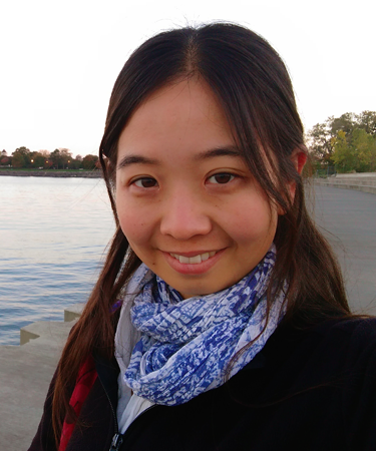 I am pleased to report that Chihway Chang will be an Assistant Professor with the Astronomy & Astrophysics Department and a senior member of the KICP, starting October 1, 2018. - John E. Carlstrom Subramanyan Chandrasekhar Distinguished Service Professor and Chair Department of Astronomy & Astrophysics Related Links: KICP Members: John E. Carlstrom; Chihway Chang Adler Planetarium's "Fabric of the Universe" display May 14, 2018 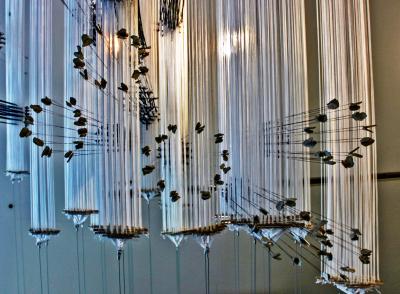 Related Links: KICP Students: Benedikt Diemer |



 Overview